

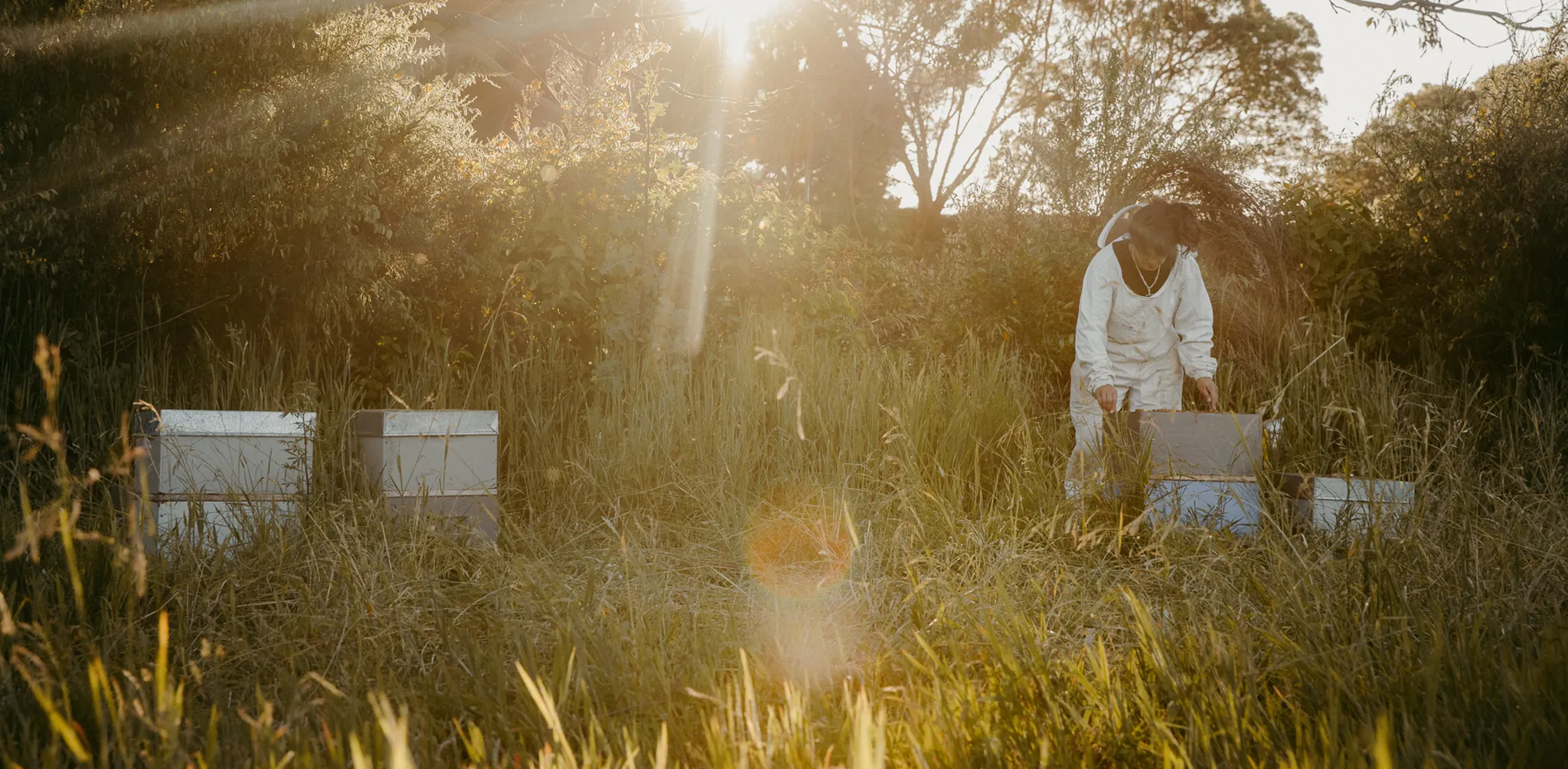
Every jar of certified organic honey starts long before it reaches the shelf.
It begins out in the landscape, with the bees. It begins with the flowers they visit, the air they fly through and the land surrounding their hives.
At Waitahanui Apiaries, our bees forage in carefully selected certified organic and wild natural areas surrounding Lake Taupō. These clean, natural environments help shape the purity, flavour and quality of the honey we produce.
Certified organic honey is not just about the final jar. It is about where the hives are placed, how the bees are cared for, how the honey is tested and how every batch can be traced back to the land.
How Certified Organic Blocks Are Selected
Choosing where to place our hives is never random.
Organic honey starts with where the bees live. Because bees can travel several kilometres from the hive in search of nectar and pollen, the surrounding environment matters.
Under BioGro Organic Standards, our hives must be placed in organic or wild natural areas and are generally kept at least 3 kilometres away from potential contamination sources. This includes intensive farming areas, urban centres, motorways and industrial sites.
This helps give our bees access to clean, natural forage and reduces the risk of unwanted residues entering the hive.
When selecting certified organic blocks, we look for areas that provide strong natural food sources for the bees, including flowering mānuka, kānuka, clover and other native or wild plants. We also consider the surrounding land use, nearby activity and whether the location supports the strict requirements of certified organic beekeeping.
The result is honey that reflects the landscape it comes from: remote, natural and carefully protected.
How the Bees Find the Best Flowers
One of the most remarkable things about honeybees is that they do not just work together. They communicate with incredible precision.
When a forager bee discovers a rich source of nectar or pollen, she returns to the hive and shares the location with the other bees through a special movement known as the waggle dance.
This dance takes place on the honeycomb inside the hive. The bee moves in a figure-eight pattern while waggling her body. Through this movement, she can communicate three important things to her hive mates:
Direction: which way to fly in relation to the sun
Distance: how far away the food source is
Quality: how rewarding the nectar or pollen source is
The more enthusiastic the dance, the more likely other bees are to investigate the location.
What makes this so amazing is that bees can communicate locations several kilometres away from the hive. Other worker bees watch the dance, understand the information and then fly out to find the exact patch of flowers their hive mate has described.
Scientists first confirmed the meaning of the waggle dance in the 1940s, and it remains one of the most sophisticated forms of communication discovered in the insect world.
No single bee is in charge, yet thousands work together as a highly organised community. Through communication, cooperation and instinct, a colony can adapt to the seasons, find the best food sources and produce the honey we enjoy.
How We Test Our Honey
Before our honey reaches your table, samples from each batch are independently laboratory tested.
This testing helps verify the quality of our honey and checks for unwanted residues.
As part of our testing programme, our honey is screened for residues including:
Glyphosate: a commonly used herbicide
Amitraz: a synthetic varroa treatment used in some beekeeping systems
Flumethrin: another synthetic varroa treatment used for mite control
These tests help confirm our honey meets strict quality and organic certification requirements, while giving our customers confidence in what they are eating.
For us, testing is not just a compliance requirement. It is part of our commitment to producing clean, traceable honey from the remote landscapes surrounding Lake Taupō.
Why We Share Our Testing
When we attended weekend farmers’ markets, we did not just tell people our honey was clean. We showed them.
We often had copies of our independent laboratory residue test results available for customers to view. People could see for themselves that our honey had been tested for residues such as glyphosate, amitraz and flumethrin.
Today, we continue that same commitment to transparency by making our residue testing information available on our website.
We believe customers deserve to know exactly what is in their food. That is why we are happy to share the testing behind every batch of honey we produce.
For us, trust is not built through marketing claims. It is built through evidence.
From the Organic Block to the Jar
Certified organic honey is about more than a label.
It is about the land the bees forage from, the distance from possible contamination sources, the way the hives are managed, the testing that takes place and the care behind every batch.
At Waitahanui Apiaries, our bees collect from certified organic and wild natural blocks surrounded by the beauty of the Lake Taupō region.
From the first flower visited to the final jar, our goal is simple: to produce certified organic honey that is clean, traceable and made with care.